Who this is for
Repeatable, high-occupancy bathroom layouts.
Where GRP makes commercial sense
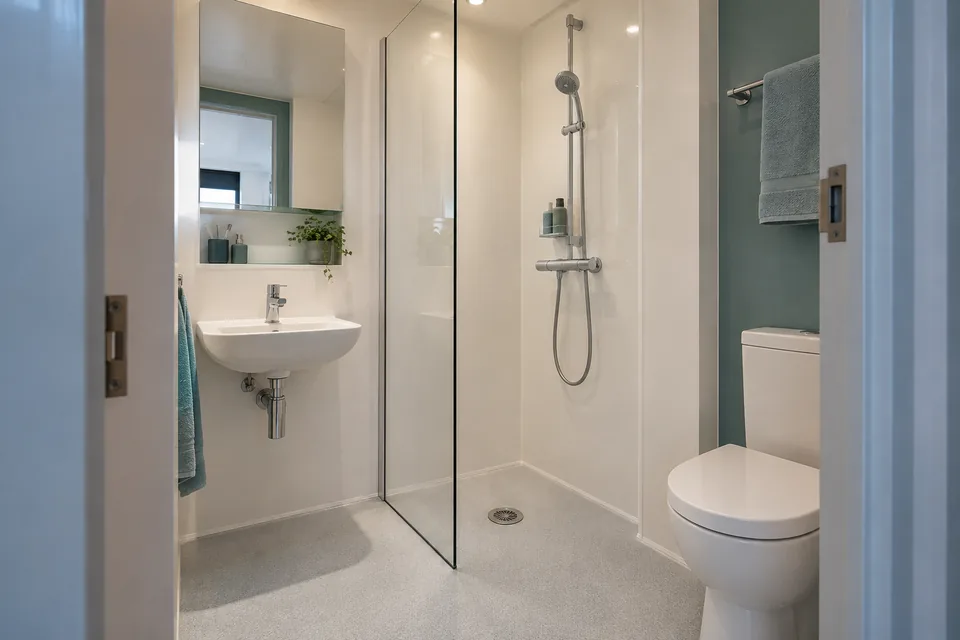
Standardised hotel room types, student accommodation and operator-led housing can benefit from consistent moulded interiors. Layout and shell geometry should be agreed early because alterations can affect mould design and cost.
- Repeat the same layout where functionally possible.
- Confirm the desired appearance with a physical sample.
- Check accessible and exceptional unit requirements separately.
Performance questions
Do not treat 'GRP' as a blanket specification. Review the actual product's fire behaviour, acoustic assembly, floor loading, slip resistance, service access and cleaning compatibility.
- Request relevant test evidence and maintenance guidance.
- Verify waterproofing details at openings and service penetrations.
- Confirm repair and replacement procedures for damaged finishes.
Before tendering
Set a clear finish, fixture and services schedule. Check whether the proposed GRP solution will be accepted by operators and project stakeholders before committing to tooling.
- Ask for a mock-up with representative fittings.
- Check shipping dimensions and lifting weight.
- Clarify minimum order quantity and change process.
Questions project buyers ask
Does GRP always cost less than a tiled pod?
Not always. The total depends on volume, tooling, product specifications and the complete supply/installation scope.
Can GRP pods be used in premium hotels?
They can be used where finishes meet the operator's brief, but steel-framed tiled solutions are commonly considered for more bespoke luxury interiors.
Decision note
Codes, permits and system performance vary by location and selected manufacturer. Ask your architect, MEP consultants and approving authorities to review the specific proposal before contract award.